
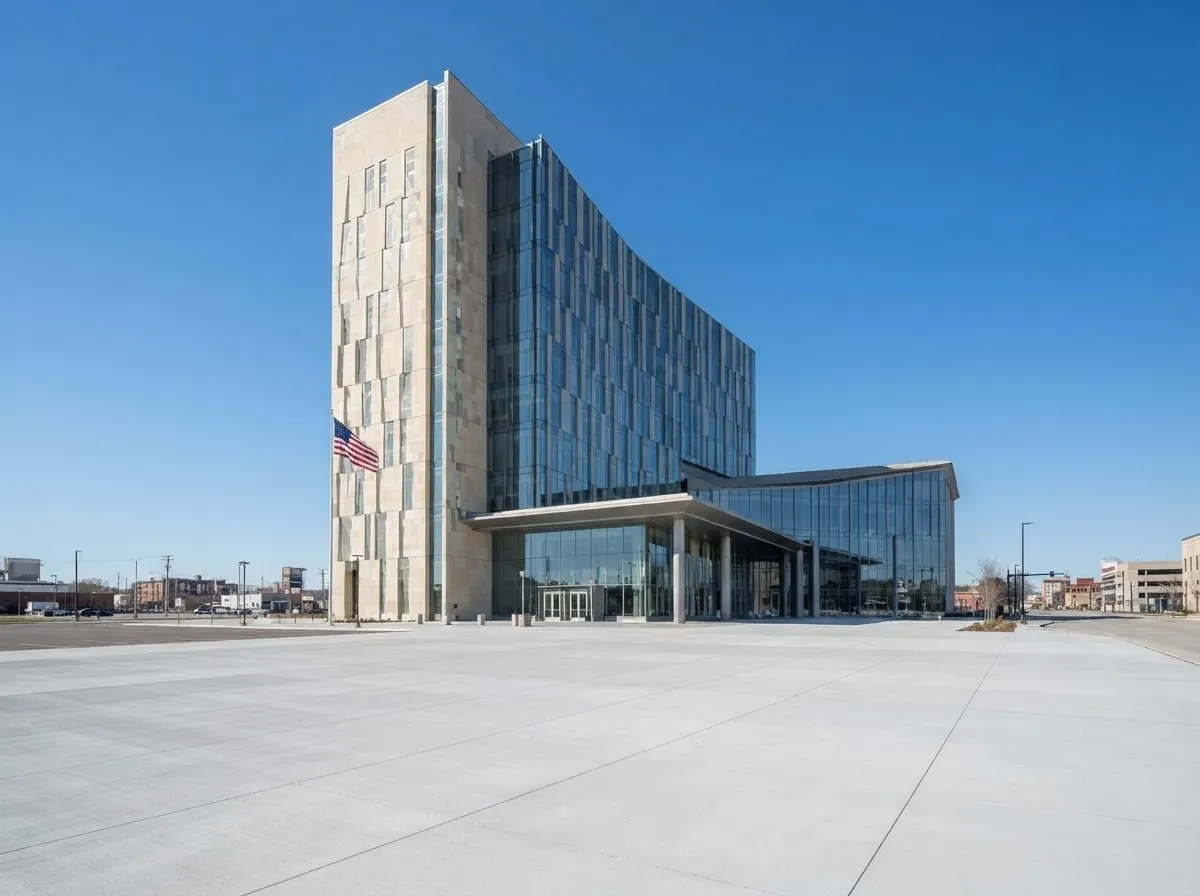
Court records of Will County in the state of Illinois are maintained by the Clerk of the Circuit Court and are accessible through online tools, official court portals, and directly at the clerk's office. WillCourt.us allows you to quickly find public information about court cases in this county. Additionally, you can use the Twelfth Judicial Circuit portal, the Will County Clerk office, and other government resources of the state of Illinois.
Will Court System Overview
Will County is part of the Twelfth Judicial Circuit of the Illinois court system, which covers only this county. The Illinois court system is based on circuit courts — courts of general jurisdiction that handle criminal, civil, family, probate, and other categories of cases. The Trial Court Administrator is Roger Holland. The courthouse is located in downtown Joliet.
All divisions of the circuit court — criminal, civil, family, probate, juvenile — operate under a single administrative leadership within this county. The Office of the Illinois Courts provides overall coordination between counties.
Courts Serving Will
Residents of Will County may deal with several judicial institutions — at the state and federal levels.
State Circuit Court
Federal District Court
Will County belongs to the Northern District of Illinois, Eastern Division.
Federal Bankruptcy Court
Will County Sheriff's Office
Will County Sheriff's Office is responsible for enforcing court orders, detention, and ensuring security in the court.
What Types of Cases Will Courts Hear
The Circuit Court of Will County is a court of general jurisdiction. Here are the main categories of cases heard:
- Criminal cases: felonies, misdemeanors, infractions
- Civil disputes: claims of various amounts, including small claims
- Family law: divorce, custody, alimony, protective orders
- Probate: estate management, guardianship, trust management
- Juvenile cases: juvenile offenses, child protection, adoption
- Traffic violations and DUI cases
More details on each category are in the following sections.
District Court Cases in Will
In the Illinois system, there is no separate "district court" at the county level — instead, the circuit court hears all cases. Serious criminal cases (felonies) are brought to the circuit court after a preliminary hearing where a judge determines the sufficiency of evidence. Civil claims over $10,000 also go to the general civil division.
Cases are assigned to judges according to the court's internal schedule. Appeals from lower divisions (e.g., small claims division) are also heard by the circuit court, and then by the Third District Appellate Court. Post-trial motions in criminal cases, including sentence review, are filed directly with the same court.
Magistrate Court Cases in Will
Illinois uses a system of associate judges, who perform functions similar to magistrate judges in other states. These judges handle:
- Misdemeanors and minor offenses
- Preliminary hearings in felony cases
- Civil claims up to $10,000
- Small claims — up to $10,000 according to Illinois law
- Traffic violations
- First court appearance in DUI cases
Due to the significant case volume in Will County, associate judges often specialize in specific categories — for example, only traffic cases or only small claims. This speeds up proceedings and reduces the load on general jurisdiction judges.
Family Law, Probate, and Juvenile Matters in Will
Family Law
Divorce, custody, alimony, paternity, and protective order cases are handled by the family division of the circuit court. Certified copies of dissolution of marriage documents are issued by the clerk of the circuit court where the decision was made.
Probate
The probate division handles estate administration, appointing guardians and conservators, and trust management. A case is initiated by an interested party by filing a petition with the court. Probate judges oversee asset distribution and protect the interests of incapacitated persons.
Juvenile Matters
Juvenile cases — offenses, child protection, adoption — are handled by a separate juvenile division. Juvenile case records are confidential under Illinois law and are not publicly accessible.
How Cases Move Through the Will Court System
- Case initiation. A criminal case is initiated by the prosecutor (State's Attorney) by filing an indictment. A civil case — by the plaintiff filing a complaint. A family or probate case — by filing a petition.
- Judge assignment. The case is automatically or according to a schedule assigned to a specific judge.
- First hearing. In criminal cases, this is an arraignment — reading of charges and determination of bail. In civil cases — a scheduling conference to set deadlines.
- Pre-trial phase. Parties exchange evidence (discovery), file motions. In criminal cases, plea bargaining is possible.
- Trial or settlement. The case concludes with a verdict, settlement, default judgment, or guilty plea.
- Post-decision. Sentencing, filing an appeal, enforcement of the court's decision.
Electronic filing (e-filing) is mandatory for most types of cases in Illinois — all documents are submitted through the e-filing system indicated on the Will County court page.
Court Administration, Local Rules, and Public Access in Will
The administrative leadership of the county courts is carried out by the Chief Judge of the Twelfth Judicial Circuit along with the court administrator Roger Holland. Local rules and administrative orders of the court are available through the official page of the Will County Courthouse, where the sections Administrative Orders and Forms are published.
According to the Illinois Freedom of Information Act and the rules of the Illinois Supreme Court, most court records are public. However, some categories are restricted:
- Juvenile cases — confidential
- Adoption records — closed
- Sealed and expunged records — not accessible to the public
- Certain mental health cases — limited access
Hearings can be attended in person at the courthouse. Some hearings are held remotely — check with the clerk's office or the court page. Public resources on the Illinois courts website provide useful information for citizens who want to understand court access procedures.
Court Records and Related Court Resources in Will
- Online case search. Circuit court records are available through the Circuit Clerk portal — the link is posted on the court page in the Online Records section.
- Criminal history. The Bureau of Identification at the Illinois State Police maintains conviction information. A request can be submitted through the CHIRP portal.
- Vital records. Birth, death, and marriage certificates are issued by the Vital Records department of the Will County Clerk's office at 302 N. Chicago St., Joliet, IL 60432. Phone: (815) 740-4615.
- Inmate search. The Individual in Custody Search on the Illinois Department of Corrections website allows you to find information about individuals serving sentences in state correctional facilities.
- Sex offender registry. The registry is maintained by the Illinois State Police and is available on their official website.
- Property tax information. The Will County property tax online portal allows you to check assessments for a specific parcel.
- State public records. The Illinois archival database provides access to various public records at the state level.
- Forms and self-help. The Forms section on the court page contains templates for self-filing documents. Public resources of the Illinois courts help navigate procedures without a lawyer.
To obtain certified copies of court decisions, contact the Will County Circuit Clerk's office directly — in person or by mail. The fee depends on the type of document. If you need general information about county court records, start with WillCourt.us.